Thursday, March 13, 2008

And Then They Kill Me

This morning someone sent me a link to a news story about 122 missing FAA investigator badges. If an accredited representative of the local aviation authority, which in the United States is the FAA, requests access to an airplane, I must accommodate him or her. The only way a crew could say "no, you can't ride along with us in the cockpit" is if all cockpit seats were already filled by persons essential to the flight. The FAA inspector can also go anywhere in the airport.

FAA inspectors may pose as ordinary passengers to evaluate airline compliance of passenger briefings. And then in cruise the inspector could present his credentials to the flight attendant and ask for cockpit access. I believe in this case he could be denied access if the airline SOPs forbade opening the cockpit door for any non-emergency reason during flight.

According to the article, FAA inspectors may also bypass airport security checkpoints. So here we have a scenario where someone can carry as much shampoo as they like onto any airplane they choose, and then ask to be taken directly to the cockpit and remain there for the duration of the flight. With their family-sized bottle of shampoo.

I'm thinking I might print that article out. If someone with an FAA (or Transport Canada or especially Civil Aviation Authority of Moldova) badge asks onto my airplane I will delay access until I can verify, through a published FAA telephone number, that the badge number is valid and that the person is supposed to be on my airplane. i crack myself p here, because as anyone who has ever called the FAA knows, no one seems to know what they are supposed to be doing, let alone what anyone else is supposed to be doing, and they rarely get back to you. I apologize to any affronted FAA people reading my blog, but truly to an outsider the system seems to be set up as a number of impenetrable shells, denying access to the people who know anything unless the caller is unusually persistent and lucky. If the badgeholder is legit and seriously concerned about the safety of my airplane, they shouldn't complain. If they are a legitimate FAA inspector looking for a free ride for personal reasons, they'll change their mind, and if they are an impostor ... hmm, maybe I'd better have a plan B.

Monday, March 10, 2008

Posted with Mozilla Hypnoweasel

I don't install a lot of new software for my computer. I have happily run Office 97 on my last few computers, and still am. I recently upgraded to someone else's cast-off copy of Microsoft Flight Simulator 2002. I usually ignore messages telling me to upgrade Adobe Acrobat or Flash. I grudgingly accept Windows security updates, dreading the day that one breaks something for my legacy software. But recently I decided to install a completely useless Firefox add-on. I don't know what came over me.

The add-on program is called Firesomething and all it does is change the displayed name of my web browser. That's it. A new name every time I open a browser window. It even reports that name to sites I visit, messing up everyone's user statistics, I suppose. For example, right now instead of saying Mozilla Firefox at the top of the window, my title bar reads Mozilla Spacegiraffe. It's customizable, so I can augment the list of high-performance prefixes and ensure my favourite amusing animals are in the suffix list. (I could redo it with names of animals in the first list and types of water bodies in the second, but I'd rather not go back to Weasel Inlet, even figuratively).

I love it. It makes me laugh every time I look at the title bar, and it's even a little bit useful because if I have multiple windows open I can remember that Penultimatecougar was weather and Seamoth was bus schedules.

I usually avoid blogging about my computer, because there are enough computer geek blogs out there, but I just had to report this. Why? Because the very first time I ran it, the program came up named Turbootter. And a Turbo Otter is a beautiful, hardworking airplane, AND was 4A in the crossword in En Route this month.

And in answer to the question someone asked in an old comment, without leaving an e-mail address, I asked an Airbus pilot and this is his answer: "Asymmetrical thrust for crosswind control in the air? It's certainly possible (there's nothing that would prevent it), but it wouldn't be a good idea." I don't use that technique, personally.

Also I'm in YZF this week. Anyone around?

Saturday, March 08, 2008

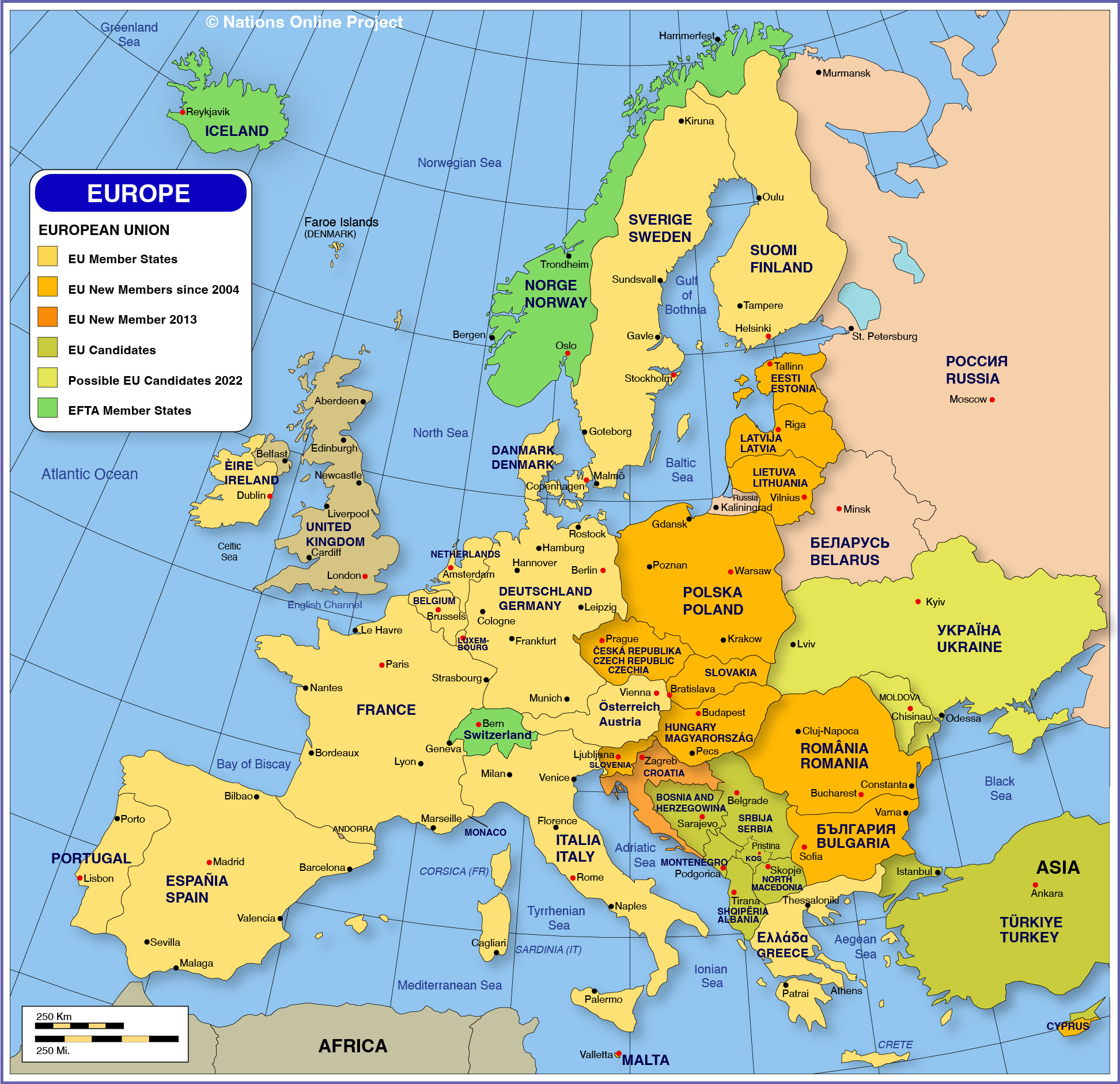
Maybe I'll Do Africa Next

On the subject of constant learning, yesterday's research on ICAO language rules highlighted one area of knowledge in which I have developed a huge gap, without actually forgetting anything. See, when I learned basic geography in school, much of eastern Europe was taken up by the USSR. There was also, for example, a country in the southeast of Europe called Yugoslavia. The capital was Belgrade, which was on the Danube River. And well, that was about all I had to know. I could sketch the countries of Europe along with the locations and names of their capital cities and major rivers. Yay, life skills. But most of it has changed. I know it's changed, but I haven't been paying close attention.

So today rather than reviewing my hydraulic system or the new commercial approach ban rules, I'm going to reacquaint myself with the countries found in the land between the Baltic, Black, Aegian and Adriatic Seas. To keep it vaguely on topic, I'm also going to discover an aviation fact about each. I'll start in the north.

Estonia borders Latvia to the south and Russia to the east. Capital: Tallinn. Aviation Fact: There are 149 aircraft on the Estonian civil aircraft register, more of which are Yaks and Antonovs than Pipers and Cessnas.

Latvia borders Estonia to the north, Russia and Belorus to the east, and Lithuania to the south. Capital: Riga. Aviation Fact: According to the national civil aviation authority a blacksmith named Zviedris–Johansons built an "air vehicle" in 1670. Sadly, no other explanation or description of this vehicle is given.

Russia borders Estonia, Latvia, and Belorus to the west, plus Ukraine, Georgia, Azerbaijan, Kazakstan, Mongolia and China to the south. Capital: Moscow Aviation Fact: During the Cold War, a German teenager named Mathias Rust evaded Soviet defenses all the way from Finland and landed a rented Cessna next to Moscow's Red Square.

Lithuania borders Latvia to the north, Belorus to the southeast, and Russia (Kaliningrad) and Poland to the south. Capital:Vilnius Aviation Fact: Rolandas Paksas, the head of the Liberal Democrats Party is a two-time winner of the national aerobatics championship of the Soviet Union.

Belarus borders Latvia and Lithuania to the northwest, Poland to the west, Ukraine to the south and Russia to the east. Capital: Minsk Aviation Fact: Natalya Myeklin was a member of the Night Witches, an all-female Soviet air regiment that flew Polikarpov biplanes on the Belarussian front during the second world war. Despite having a top speed slower than the stall speed of the Messerschmitts she was fighting, Natalya survived 840 missions over three years.

Poland borders Germany and the Czech republic to the west, Slovakia to the south, Ukraine and Belarus to the east, and Lithuania and Russia (Kaliningrad) to the north. Capital: Warsaw Aviation Fact: Carpenter and sculptor Jan Wnęk observed bird activity and anatomy, and constructed a glider which he flew from the church tower.

Czech Republic borders Germany to the west, Poland to the north, Austria to the south and Slovakia to the east. Capital: Prague Aviation Fact: In 1910 Jan Kašpar made the first Czech air flight, in a Bleriot XI. He later flew to Prague from his hometown of Pardubice, where an annual aviation show still takes place in his honour.

Slovakia borders the Czech Republic and Austria to the west, Poland to the north, Hungary to the south, and Ukraine to the east. Capital: Bratislava Aviation Fact: Air Slovakia flies directly from Bratislava to Kuwait.

Ukraine borders Russia and Belarus to the north, Poland, Slovakia and Hungary to the west, and Romania and Moldova to the south. Capital: Kiev Aviation Fact: The first Ukrainian airplane flight took place 98 years ago today.

Hungary borders Slovakia to the north, Austria and Slovenia to the west, Croatia and Serbia to the south and Romania and Ukraine to the east. Capital: Budapest Aviation Fact: Wilhelm Kress is credited with the invention of the stick control for aircraft.

Romania borders Hungary and Serbia to the west, Bulgaria to the south, Moldova to the east and Ukraine to the north. Capital: Bucharest Aviation Fact: Romanian Henri Marie Coandă built the world's first jet-powered aircraft.

Slovenia borders Italy to the west, Austria to the north, Hungary to the east and Croatia to the south. Capital: Ljubljana Aviation Fact: Slovenian cooper Edvard Rusjan built and flew his nation's first motorized airplane in 1909.

Croatia borders Slovenia and Hungary to the north, Serbia to the east, and wraps around Bosnia and Herzegovina to the south. Capital: Zagreb Aviation Fact: Croatia Airlines is buying two new Dash-8 Q400 airplanes from Bombardier.

Bosnia and Herzegovina bordered by Croatia to the north and west, Montenegro to the south and Serbia to the east. Capital: Sarajevo Aviation Fact: In Bosnia and Herzegovina (couldn't they combine the names and call it Bosgovenia or Herzbosnia or something?) VFR aircraft must remain 300 metres verticaly and 1500 m horizontally from cloud, except below 300 m in class G airspace, where they simply need to remain clear of cloud.

Montenegro touches Croatia to the west, borders Bosnia and Herzegovina to the northwest, Serbia to the east and Albania to the south. Capital: Podgorica Aviation Fact: Early this year a Montenegro Airlines Fokker was discovered to have a bullet hole in its tail. Traditional New Year's celebrations in the area involve discharging firearms into the air.

Serbia borders Hungary on the north, Croatia, Bosnia and Herzegovina, Montenegro and Albania to the west, Macedonia to the south and Bulgaria and Romania to the east. Capital: Belgrade Aviation Fact: In 1909 Serbia had a military balloon squad led by Kosta Miletić.

Albania borders Greece to the south, Montenegro and Serbia to the north and Macedonia to the east. Capital: Tirana Aviation Fact: According to the Albanian Aero Klub "Eagle" there has never been civil aviation in Albania. They are trying to promote aviation through model airplanes, but they have nothing. Read the FAQ.

Macedonia borders Greece in the south, Albania to the west, Serbia to the north, and Bulgaria to the east. Capital: Skopje Aviation Fact: Macedonia wanted to upgrade its government VIP transport from a King Air and a Learjet, but the International Monetary Fund disapproved..

Bulgaria borders Romania to the north, Turkey and Greece to the south and Macedonia and Serbia to the west. Capital: Sofia Aviation Fact: Bulgaria was one of the world's first air forces to wear identification markings.

Moldova borders Romania to the west and Ukraine on all other sides. Capital: Chisinau Aviation Fact: All the information I can find linking airplanes to Moldova (or Moldava, or Moldavia) includes either flying without a licence or trafficking in drugs, arms or blood diamonds. I can sort of sympathize with the unlicenced air carriers, if I assume that the actual civil aviation authority is as responsive as I have found their website.

People familiar with the region and/or recent events will notice that I left out Kosovo. I did that because Canada hasn't recognized it as an independent country. It is surrounded by Montenegro, Albania, Bosnia and Herzegovina, and Serbia and considers Pristina to be its capital.

Now you can test yourself. By the way, all these "facts" are from quick Google searches and are not checked in any way. I'm sure some of them are wrong, and I'm sure there are more interesting stories about some of these places. Comments from readers who know more about these countries and facts are welcome.

Friday, March 07, 2008

Pardon My French

I had a serious "oh firetruck!" moment today as I picked up my mail. One envelope was from Transport Canada. At first I thought it going to be a past due notice for the bill from my medical renewal, but I actually paid that thing for once, and already received the receipt. I could see very distinctive blue paper showing through the window of the envelope. There's only one thing that colour and that's a new pilot licence. Transport sends new licences all the time: every time I change my address, qualify on a new airplane, renew my qualifications on an old one, or renew a rating. So this isn't normally a reason for concern. But I wasn't expecting a new licence. The last time I received an unsolicited licence replacement, the new licence had sharply curtailed privileges. I tore open the envelope.

All my ratings were there, and no unexpected restrictions. But at the top of the page was a new qualification: LANGUAGE PROFICIENCY - ENGLISH. This is part of the new ICAO drive for minimum language standards for pilots. I suppose all Canadian licenced pilots have been grandfathered as competent in the language they chose for communication with Transport Canada. I certainly didn't take a test, and voluble as I am, I can't imagine the TC bureaucracy working such that someone said, "Oh her she speaks English fluently. I wish she'd shut up."

The test itself is not very difficult. I know someone who took a course to qualify as a tester. The test itself is done by telephone. You are asked to respond to basic questions and make requests given certain information. It is designed so that there is enough variation in very similar tests, that it would not help someone to have his higher-skilled friend take the test and tell him what to say, because if the cheater could understand the question well enough to know how to correctly vary the memorized answer, he would speak English well enough to pass without cheating.

There are six levels of language proficiency. Level 6 is Expert, and a pilot with this proficiency is considered to maintain it throughout her life and does not have to retest. Lower levels of proficiency represent a language learned less thoroughly, and therefore subject to being forgotten. Pilots reaching lower levels of proficiency need to retest periodically to prove they still remember. Pilots and air traffic controllers have to reach proficiency level 4 to qualify for international routes. The way it will work is that anyone who scores below the required proficiency will have an endorsement on his or her licence, so that a licence with nothing on it is good. Because Canada allows pilots to be licenced with proficiency in French only and not English (for people who never venture into unilingual anglophone airspace), my licence specifies which language I use. It looks like some other countries, such as the former Soviet Union, also allow pilots to have multiple proficiencies. The example on the site has flights from Russia to Byelorus (English not required) and from Russia to Finland (English required). Man there are a lot of countries there that didn't used to be!

Judging from the implementation plan in this ICAO document, Canada is quick off the mark. Implementation is scheduled from 05 March 2008 to 05 March 2011, and I've already got mine. I can't find a simple document that lays out the whole rating system. I looked on Transport Canada and the ICAO website.

Thursday, March 06, 2008

More on V1 Cuts

I'll let the expert accident investigators figure out what happened to the Airbus in Hamburg, while I say some more about the V1 cut. Someone looked at the fact that the engine failure in Vancouver happened only two seconds past V1 and asked, "Isn't there a safety margin?" I have two answers to this.

First the non-specific answer. With airplanes we don't lie about safety. It's not like keeping a couple of steps back from the edge of a cliff to be safe. Every issue in aviation is like keeping one step away from a precipice on each side. You don't increase your margin of safety by taking two steps back from one edge if there's a drop off in the other direction, too. In the climb after takeoff, the narrow path runs between too low a climb rate and too slow to fly. At coffin corner it's between too fast for stability and too slow to fly. With weight and balance every pound I don't put in the airplane is a pound of fuel I won't have in an emergency. And if the manufacturer tells me I have less fuel than I actually do, that doesn't keep me "safe," it forces me to land in a bog when I could have safely gone on to an airport.

Specifically for V1, that is your safety margin. Before V1 is called it is safer to stop. After the call, it is safer to continue. If the runway is extra long, there maybe enough runway to take off even if the failure occurs below V1 and there may be enough runway to stop after V1, but to have the greatest margin of safety, the pilot must follow the drill.

CAI Flight 17 reached V1 at 164 knots. Two point two seconds later there is a loud bang. In those two point two seconds the airplane has accelerated to 170 knots and travelled 500' further down the runway. One point three seconds later, less than the time that it takes me to say "what the hell?" the captain calls reject, and the airplane is travelling at 172 knots, and is 900 feet past the V1 point. Those numbers are from the report I thought I was citing in the first place. (No I don't expect you to read it; it's longer than the other one. The numbers are from Figure 3.)

A runway that is just long enough to stop or go at V1, and no more, is called a barely balanced field. You might think that was an odd coincidence, but it is common to load the airplane and set the power such that the weather conditions will give a barely balanced field length. If the field is more than long enough, it's true that the V1 assigned to pilots could be put in different places. As soon as I say that, someone is going to jump on me for it, because no one wants pilots thinking about it. The correct reaction to an engine failure is hammered into pilots through hours in the simulator. There is an allowance for the reaction time of healthy well-trained pilots to recognize the engine failure and to react and move the controls from full speed ahead to maximum braking. That is already calculated in when determining the V1 speed, so the pilots don't have to think about it. That's important. There are so many things pilots are supposed to think about, but in a V1 cut they are supposed to just act.

I'm cheating on a couple of things here, as the space available to take off in is not always equal to space available to brake in, and different aviation authorities define things like balanced field length slightly differently here, and I'm going to get yelled at if I get very specific. Here's a good definition of V1.

V1 The speed at which, if an engine failure occurs, the distance to continue the take-off to a height of 35 feet will not exceed the usable take-off distance, or the distance to bring the airplane to a full stop will not exceed the accelerate-stop distance available. The engine failure speed V1 must not be less than the ground minimum control speed Vmcg, nor greater than the rotation speed Vr, nor greater than maximum V1 brake energy limit.

The 35 feet reflects other rules guaranteeing adequate obstacle clearance. Note also that it's no good if there is enough runway to take off in, but the airplane can't go straight on one engine because there is inadequate airflow over the rudder to control it. Plus there's not much point having adequate room to brake if your brakes are going to set fire to the airplane. They are likely to get hot enough to blow the tires anyway in an emergency stop.

Tuesday, March 04, 2008

Crosswind Landing Decisions

I haven't posted for a few days because I've been enjoying the discussion about this wingtip strike that has cropped up in the comments to my last blog post.

In the clip, you can see that the airplane is approaching the runway in a strong crosswind, strong enough that the pilots have had to turn the longitudinal axis of the airplane to the right, to a significant angle with respect to the runway, in order to keep the path of travel aligned with the runway centreline. The airplane is travelling through the air in the direction that it is pointing, but the air is moving from right to left such that compared to the ground, the airplane is not moving to the right. Depending on factors like the position of the engines and the construction of the landing gear, the pilot usually needs to straighten the airplane out to some extent before touchdown, so that the wheels line up with the direction of travel. This should be done with rudder, because doing it by banking has two major problems: banking while very low to the runway risks striking the wingtip or engine pod, and banking away from the wind gives the wind a chance to pick up the into-wind wing as the wheels touch down.

As you straighten the airplane out, the wind continues to push it sideways, making it want to drift with the wind, in this case to the left. And the act of straightening it out does two things to make the airplane want to roll away from the oncoming wind. First, as you yaw the airplane with the rudder, you're turning it about the vertical axis, making the into-wind wing go faster. And second, as you turn the airplane away from the wind, the fuselage shields the downwind wing from gusts. Lift is generated by air flowing over the wing, so the into-wind wing gets more lift, making the airplane want to roll away from the wind.

When I straighten out an airplane in the flare for a crosswind landing, I put the into-wind wing down, and then use the rudder to keep myself straight. The airplanes that I have been certified on have had either high wings, or significant enough dihedral (wings that slope up from root to tip) that I haven't had to worry about striking a wingtip or pod, but I know this is a concern in some types. I need to know that as I touch down I will have enough rudder authority to keep the airplane straight while maintaining the wing down no more than it needs to be. And I need to follow through after touchdown, turning the ailerons such to kill the lift on the into-wind wing and make sure the airplane stays down.

The pilot needs to decide on final approach whether she will be able to maintain control of the airplane, despite the wind, as it slows in the flare. If the approach is stabilized, such that the rate of descent is constant and the speed is on schedule, the pilot can judge the consistency and strength of the gusts to make the decision. Usually there are a few things to guide the pilot in making the decision: the manufacturer's maximum demonstrated crosswind performance, the company's crosswind restrictions, and the pilots personal limits. While there is no law prohibiting a pilot from landing an airplane in harsher crosswinds than the manufacturer's test pilot demonstrated, usually company limits don't exceed the manufacturer's. A pilot or the company may set an individual limit lower than the company-wide one. This helps to counteract pilot machismo. The pilot can say, "oh I could have landed in this, but it's over the limits, so I won't." Company SOPs will also specify that if an approach is not stabilized, the pilots must go around.

This is all fun and challenging, and I imagine the co-pilot (yes, so soon after my entry on pilots and co-pilots, it was the co-pilot who was flying) had a big grin on his (or, if Syrad's information is correct, her) face right up until the point when it all went quite literally sideways. A lot of the discussion on this has centred around the fact that both the media and the company are praising the pilots for a job well done. I doubt the pilots see it quite that way.

I once watched an extremely similar thing happen at a company where I worked. There was a nasty rainstorm and the winds were so strong they had knocked out power at the terminal. I had loaned my handheld radio to the dispatcher so he could continue his duties, and was waiting for this last flight of the day to come in so I could take it the radio home with me. I remember standing in the dark terminal looking through the glass door. Beside me was another pilot, and the wife of the arriving captain. The airplane came into view on what should have been an into wind approach. But strong winds are rarely steady winds and it is especially common for winds to change abruptly in strength and direction very near the ground. There was a sharp yaw and one wing went down, the tip struck, caught, and for a moment I thought the airplane was going to flip over. So did a jumpseating captain on board, as he told us later.

The airplane didn't go over its centre of gravity, so the crew were able to right it, and taxi in. There were no injuries and only wingtip damage, not even enough to constitute an accident. The passengers, including company, were all somewhere between white and green as they disembarked.

No one was filming it, and it wasn't a jet. so it didn't make international news, but I remember the captain beating himself up about it. You don't blame a gust, except in jest, and you know that when you survive something like this with minor wingtip damage, you were lucky, not good.

Friday, February 29, 2008

Take-off Decisions in Large Multi-Engine Airplanes

The topic of thinking in advance about what could go wrong, brings me back to my progression of posts about engine failures at take off. In a single-engine aircraft, you have to stop or land, and your choice is where. In a light twin, you have to abort the take-off if the airplane is on the ground, and in flight at low speed you may or may not be able to get the gear up and maintain the speed and altitude to turn back to land on the runway. A pilot must have thought about the options in advance and then maintain airspeed and control in order to have the best chance of at least collecting insurance on what's left of the airplane. This pre-planning becomes formalized for large multi-engined airplanes.

In transport category aircraft, the speeds involved are sufficient that trying to stop with insufficient runway remaining could be as dangerous as trying to fly without sufficient airspeed. To quote Maverick from Top Gun "You don't have time to think. If you think, you're dead." So transport category airplanes are certified and flown in a way that reduces the amount of thinking the pilots have to do at such a critical moment. To begin with, transport category airplanes are required to have enough power to accelerate to take-off speed and fly with one engine failed. And according to the rules for operating them, at any stage of the take-off there is always enough runway to either continue the take-off or to stop on the remaining runway. The speed that determines that go/no-go point is called V1 (vee-one) and is determined and discussed in advance of every take-off.

A number of factors determine how much runway an airplane needs to take off. These include aircraft weight, thrust, headwind component, and runway conditions. Similar factors affect the amount of runway required to stop, with braking force replacing thrust. The faster an airplane is going, the more dangerous it is to try and stop it, but it's also very dangerous to continue full power off the end of a runway that is not long enough for take-off. It's not the sort of thing you want to be trying to figure out at 250 km/h right after one of your engines has made a very loud noise. The calculations are done using tables, graphs or a computer, and the result is V1, the speed at which the runway required to stop is equal to the runway required to continue. During the take=off run, the non-flying pilot calls out "vee-one" when that speed is reached, and typically the flying pilot takes her hand off the throttles to emphasize that the airplane is committed to flight.

Vee-one isn't necessarily the highest speed at which it is still possible to stop on the runway, but above V1 it's safer to keep going. So V1 is the highest speed at which it is safer to stop than continue, and pilots are supposed to continue if an engine failure is recognized after the vee-one call.

None of this takes into account the possibility that something beyond an engine failure has happened. If the airplane is on fire, or the tail has fallen off, it's clearly better to attempt to stop on the runway, and continue to whatever is beyond the end of the runway, than it is to take a non-airworthy plane into the sky. Here's an account of a captain who decided to abort after V1. They had experienced an engine failure, but the captain believed it to be a bomb, and aborted the take-off, overrunning the pavement. I'm not sure if this particular report mentions it, but I remember one report about this accident mentioned that the captain had once witnessed a takeoff by an airplane that had been damaged too much to fly and had broken up during the go-around. He vowed he would never do that.

There's quite a bit more to say about this, but I'm going to leave it for another entry, because I expect some interesting comments that I'll want to respond to or expand on.

Wednesday, February 27, 2008

A Particular Bit of Paper

Keeping track of bits of paper lends little glamour to aviation, but it's part of your job as a pilot and carries significant penalties if not properly done. It's true that the airplane flies just as well with and without paper, but a discrepancy in paperwork can point the way to a safety issue in the airplane itself. And I have a story, which I believe is true, told to me by someone who works in a charter company flight department. Identifying information has been changed to keep everyone out of more trouble than they're already in. It's a story about how a lack of paperwork tried to kill people.

It starts with e-mail between the flight department and the company's assigned Transport Canada inspector. The company was working on an amended Operations Manual (amending manuals is a never-ending process, and all changes must be approved by Transport), so the e-mail was in relation to that

Please look at Appendix "B" amendment #3, shouldn't this be Appendix "C"?

Because, you know, the airplane is going to crash and burn if the pages in the manual aren't numbered correctly. The savvy ops manager leaves a few easily rectified errors of this type in the manual, so that Transport can spot them, and then, feeling useful, approve the corrected version. But the e-mail continued.

I received a notice today that you have removed VBP from your operating certificate, did you sell the aircraft?

It was the second part that chilled my informant's blood. The inspector received a notice that the company removed VBP? That's not a good sign, as VBP was parked at an airport overseas, ready to fly back to Canada early that afternoon. A telephone call to the inspector confirmed that according to Transport Canada licencing, the airplane in question was no longer registered to the company. What? Airplane identity theft?

The airplane I'm calling VBP was not owned by the company, but leased. That's not in itself a problem; leasing is a perfectly acceptable tool in fleet management. In order for an airplane owned by another party to appear on a Canadian operating certificate, there needs to be paperwork. In this case the lessor and the lessee had signed a lease agreement granting use of the airplane for one year. Problem was that that paperwork had been signed and dated fourteen months earlier. A replacement lease agreement was actually signed in the month after the expiry of the first one, but due to a change in personnel in the company, and the rate at which paper accumulates in aviation, the new agreement didn't get sent to Transport. It didn't get sent anywhere, was just quietly buried like an archeological treasure, on someone's desk.

When Transport didn't receive proof of a renewal of the agreement, they cancelled VBP's registry. And fortunately the person responsible had a strong heart, for he survived the shock of discovery.

This is where it pays to have established a reputation for doing ones best to comply with the regulations. The person into whose desk strata the document had been fossilized made the confessional call to the head of the appropriate Transport Canada department.

"How do I reinstate this aircraft."

"Well, is VBJ on the ground?"

"Yes"

"Then it's really easy - just get the aircraft copy of the C of R and fill out the form on the back of it, then fax it in to me."

"Umm, the thing about that is the airplane is on the ground, but it's in another country."

"Oh"....long pause...."Well I guess we'll have to do it the hard way."

Transport faxed some forms to fill out, and then they had to go online in order to pay $60 for a temporary Certificate of Registration and $110 for a permanent one, and print out the receipts. Next step was to fax in those receipts, along with the completed forms, and wait and hope every t was crossed and i dotted.

Meanwhile the crew of VBP were far away, innocently preparing to depart for Canada. A call from company advised the captain to pick up a fax from the FBO before he left. He said sure and went back to preparing for the flight.

VBP was scheduled to depart at 1 pm, and at 12:47 pm the temporary C of R rolled out of the company fax machine in Canada. They turned around and faxed it to the overseas FBO, where the missing paperwork tried a second time to claim the life of a pilot.

Despite the $3-per-minute charge, the overseas pilot called the home office using his personal cellphone. "What the hell? Why do I have a new C of R?"

"Long story. Just be glad you have it."

"What do you guys do in the office all day? Think of ways to give me a heart attack?"

"Yes. Yes we do."

That's the real reason they give us an ECG every second medical. They need to make sure our hearts can withstand this kind of shock.

Monday, February 25, 2008

I Sit Back and Think of England

The following blog comment, made this morning by Steve at the Pub, reveals passenger-think so stunningly bizarre that it deserves a whole blog entry.

Occasionally when asked by passengers what I thought about when flying (rotor wing), I stated (accurately) that am always running through in my mind where and how I would land if the engine quit. (This scenario updated mentally every few seconds).

The (puzzling but all too common) response: "Hmmpff, we CERTAINLY aren't flying with you then!"

I've said several times on this blog that as pilots it's our job to think about what could go wrong, and that that becomes a permanent mindset. I've described, for example, being laughed at for noting a feature of an SUV that could pose a hazard during an emergency evacuation. In a single-engine aircraft I am doing exactly what Steve does, surveying the countryside for an appropriate place to land if the engine failed. Once upon a time I had a job where I flew a small single-engine airplane at fairly low altitude over the same area every day. On my day off I took my car and I drove around the area to inspect the emergency landing sites I had chosen from the air, looking for wires and ditches and other hazards that I might not have noticed from above. I paced them off to see how long they were, and whether there were good things to crash into in the overrun. I learned their names so that I would be able to broadcast "Landing on the sports field of Sir John A. Macdonald school" as opposed to "Landing on some school field down here." I never had to use any of my chosen sites, but I was prepared.

I can understand why passengers would be taken aback to learn that the pilot is thinking about such a thing. They were thinking about how funny cows look from on top, or about how a lot more people have swimming pools than they expected. I can see them being frightened by the reminder that the engine could quit. I can see them being surprised that the pilot would have enough control to choose a landing site. But to have them reject the pilot for that? It makes no sense.

I wonder what answer they were expecting. "I admire the majesty of the scenery"? Surely not, "It takes all my concentration to remember what all these dials and levers do." Perhaps, "I think about my giant pilot paycheques," or "I daydream about going down to the pub for a few and then shagging my girlfriend," or "It depends how close to lunchtime it is." I mean honestly, if the safety-oriented answer isn't the safe one, what is? I suppose a more reassuring wording could be, "I'm always concentrating on what I can do to enhance the safety of the flight," but that's so insipid it doesn't sound believable, even though it's a variety of the truth.

If the safe answer is not a safe answer, then there's no safe answer. It makes you want to lock the passengers behind the cockpit door and not tell them anything that isn't on the list of approved PAs.

Saturday, February 23, 2008

Pilot and Copilot

Public comment on the B777 that landed short of the runway at Heathrow has made me realized how little the general public understands of pilot duties during a flight. People are aware that there are two people up front, but are often quite vague on what they do.

Both of the people sitting in control seats in an airliner are fully qualified pilots. They have taken the same training and passed the same tests on the systems, handling and emergency procedures. Either pilot is capable of flying the airplane without assistance from the other. The main difference between the tests they take is the seat they sit in: left or right.

The pilot who is in charge of the flight is called the captain, and sits on the left. She is responsible for the decisions made by the pilot in the right seat, The second pilot might be called the "co-pilot" or the "first officer," often abbreviated FO (eff-OH). The same pilot might work as captain on one type of airplane and FO on another, for the same company. At some company all pilots are qualified as captains (i.e. they have taken their tests from the left seat) and just take turns sitting in the left seat and being the pilot-in-command.

For each "leg" (from take-off to landing) one of the pilots is designated the flying pilot and the other is the non-flying pilot. In a typical operation, pilots alternate in these duties from leg to leg. The typical division of labour is that the flying pilot handles the controls and the non flying pilot tunes frequencies, programs the flight computer, talks on the radio and does other 'support' tasks for the person flying. That means that if the first officer is flying he or she gives commands to the captain, like "set take-off power" "gear up" or "could you adjust the sunvisors so I don't go blind up here."

All the main controls are accessible from or duplicated on both sides of the cockpit, but there are a few exceptions. If a circuit breaker needs to be pulled, it's often on the captain's side, so the captain transfers control of the airplane to the first officer in order to find the circuit breaker. And often steering on the ground is controllable only from the left side, so after the first officer has landed, the captain takes control and taxies the airplane to parking.

The two pilots work together as a team and practice communication just as much as piloting skills. Control may be passed back and forth during a flight for various reasons, like someone eating lunch or getting up to go to the washroom. If there is a particular challenge during the flight, control may be passed to the pilot who is best at it, or the one who wants to practice it.

That is fairly uncommon though, so if you hear of an incident where, as in Heathrow, the first officer was handling the airplane, that probably just means that the pilot in the right seat was the one who happened to be flying at the time the incident occurred.

Friday, February 22, 2008

Bits of Paper

I mentioned going over aircraft documents before flight in the new-to-me airplane. I want to say more about that. There are a number of documents that must be on board in order to fly. It's part of preparation for flight. Canadians often remember these with an acronym mnemonic like ARROWILL (there are lots of variations).

C of A: Certificate of Airworthiness. This is a bit of paper about 8" by 5" that usually dates back to the manufacture of the airplane or its importation into Canada. It certifies that if everything else is done right (maintenance, loading, operating specification, annual airworthiness reports) that the airplane is considered airworthy in Canada. I expect to see an original document, but have flown before with a certified fax.

C of R: Certificate of Registration. This bit of paper shows who operates the aircraft and for what purpose (i.e. commercial or private use) it is registered. It is usually a multi part form, so that when you sell the airplane or move, you fill out parts of the form to send in and keep other parts to use as a temporary C of R while the changes are being processed. I've flown airplanes where the C of R on board was an official fax or letter from Transport Canada acting as an effective temporary C of R. This is common with short term leases, and I've caught one of these a week before it expired, giving my company time to get on it and get me a new one.

Radio Licence: Because I make radio transmissions from the airplane, in Canada I meet the legal definition of a radio station. I carry a Restricted Radio Operator Certificate, restricted to aviation, that is. I can't go running an AM talk show in my spare time with it. Once upon a time the airplane itself required a radio station licence, but those are no longer required for flight in Canada or the U.S. The government body responsible recognized one day that airplanes were regulated up the wazoo already, and that it there was no utility in giving them a bit of paper regarding it. If I had a mission to fly in St. Pierre (a French possession off the coast of Canada) or Mexico, or further south, I might need to apply to Industry Canada for a radio station licence for my airplane. I'd have to look into those countries' regulations.

POH: Pilot's Operating Handbook, i.e. owner's manual. There has to be paperwork on board telling me how to operate all the systems and installed equipment. When the new fuel tanks were installed, a supplement was added to my manual. No one ever dares remove anything from a POH, so when you're dealing with an old airplane you may have to go through four different autopilot supplements until you finally find the one that is currently installed in your airplane--and placarded inoperative. You've seen me mention from time to time that I pull out the POH to check something. That's why it's there. I trust my knowledge, but I verify with the manual. So for obvious reasons it has to be the correct manual. If your airplane is so old that there never was a manual, it can pass a ramp check with a handwritten list of speeds and a letter from an aircraft association. I've seen it done. I've also ferried an airplane where the POH was about six mimeographed sheets, and most of it was with respect to systems that were no longer installed. I remember I determined the approach speed by noting what speed it took off at and multiplying by one and a third. I love it when book learning is useful in the real world.

Weight & Balance: This isn't the form I fill out before every flight to show that the aircraft is not over weight or out of C of G. Not all operators are legally required to do that before every flight, only to ensure the airplane is loaded within limits. The W&B form that must be on every flight is one showing the empty weight and C of G and listing the maximum weight. If components are changed on my airplane I always ask if this requires a W&B amendment. I have caught errors in this document before. I remember one where the airplane had been modified to carry more weight, but the W&B didn't match. It's okay to have the W&B faxed, so long as it's legible.

Insurance: Got to have proof of insurance on board. It might have the pilots names on it. It might say "all pilots approved by XYZ company and with N hours experience in complex multi-engine aircraft." I once found one that said (in a Canadian aircraft), "all pilots with an FAA licence." Problem was that I didn't have an FAA licence at the time. It turned out in the end that it was okay to fly because the Canadian airplane was insured with an American company that had defined an "FAA licence" to include a Canadian licence, but I refused to fly the airplane until it had been demonstrated to my satisfaction that I was insured to do so. I think the insurance companies can also define "up" as "down."

Licence: My pilot licence. I have to have mine on board for every flight, along with the medical certificate. The medical used to be called the "licence validation certificate."

Logbook: This is not my pilot logbook, which never needs to be on the airplane, but the airplane's journey logbook. American airplanes don't have these. (It's not the same as the technical logs: Canadians have tech logs in addition to the journey logbook, but a Canadian technical logbook is never allowed to go for a flight in the airplane it pertains to). There's a wrinkle here that allows the journey log to be left behind if there is no intention to land at a different airport. This allows this often bulky document to be left on the ground by aerobatic performers. The journey log is usually a letter-sized bound book with numbered pages. You can buy them in hardcover or softcover versions. (Hint: buy the hardcover. It's not a beach novel. You want it to last). Some companies use custom-printed numbered forms inside some kind of binder, so they have carbon copies for the various departments and crewmembers.

The basic documents for an American airplane are much smaller than the the Canadian ones, about the size of an index card, and I've seen American-manufactured aircraft with a little plastic pouch built into the interior, by the pilot's knee to keep the documents. On Canadian-owned airplanes the pouch is usually half torn off from people trying to keep pens in it. Canadians typically keep the documents in a ring binder or a pouch of some sort. Sometimes they are in an envelope glued in the back of the journey log.

Soon I have a story for you about an oops regarding bits of paper.

Wednesday, February 20, 2008

Checklists: Not Just for Pilots Anymore

The air regulations require checklists, and pilots can fail flight tests for improper checklist use, even if they actually completed all the required items, but it doesn't mean every pilot uses one every time. Some operators inadvertently encourage this through providing overly long, poorly formatted and difficult to use checklists.

In my career I have watched macho captains deliberately skip checklist items, or even entire checklists. I have been bullied for using the checklist, and told not to come back tomorrow unless I had the checklist memorized. I know someone who failed a PPC check on an accusation of improper checklist use. (It turned out the examiner was using the wrong checklist, so that occurrence magically disappeared from the candidate's record).

Despite pilot machismo, or passenger apprehension that following a checklist means you don't know what you're doing, checklists are a cheap, simple way to improve safety in a complex environment. A reader sent me this fascinating article on checklist use in the medical profession. The idea was initially met with skepticism, and derided as time wasting, but the lifesaving results were dramatic enough to win converts.

It made me cry, and gave me a new dedication to my own checklists.

Tuesday, February 19, 2008

Laziness & Helpfulness

My e-mail says...

I just bought a cheap mapping GPS and am programming in some local airports. What's the best online free source of coordinates for US airports?

I don't know. I always use aviation GPSes with commercial databases. But I can be lazy with this blog entry and help him out all in a few paragraphs. Because I'm sure one of you knows. He says he has to do manual data entry, so he's not looking for any particular format. Sounds pretty primitive!

My correspondent assures me that the GPS is just a toy for him and that his primary navigation will be based on current legal publications.

Monday, February 18, 2008

Happy Louis Riel Day

It's a statutory holiday today in much of Canada, under various pretenses, and I believe our southern neighbours are celebrating the birthday of one or more of their presidents. No one is actually celebrating the day's honoree; we all know it's just an excuse for a holiday during the long cold stretch between New Year's and Good Friday. But I was going to write about Louis Riel (that's "loo-ee ree-el" -- even monolingual anglophones do not say "loo-iss"), anyway.

He's certainly a controversial hero. Riel was born in 1844 in what would later become Manitoba. He studied to be both a priest and a lawyer, but never completed either. His fellow Métis looked to him as a leader, and when political events foisted an anti-French governor on the colony, Riel led an armed takeover of a government fort, then escaped capture, fled to the United States, was elected three times to parliament (in absentia), returned to lead a rebellion, surrendered, was arrested, tried and hanged for treason.

He's been hailed as a messiah, reviled as a terrorist, and formally recognized by the federal and provincial governments for his contribution to the development of the Canadian Confederation. Some people say he had gone mad before leading the second rebellion. Two parliamentary bills have been introduced to reverse his conviction for high treason and recognize him as a Father of Confederation, but neither bill passed.

I don't know as much about him as I think ought to. I'll have to get a biography better than what I can find with Google and Wikipedia. Can anyone recommend a good biography of the man? Something that is readable, but that cites primary sources. It's probably going to be something out of print, because everything I see on Chapters.ca now is kind of meta, or addressing one aspect.

As long as Canada exists, its citizens will want to read about Louis Riel because his life summarizes in a unique way the tensions of being Canadian: English versus French, native versus white, east versus west, Canadian versus American.
--Thomas Flanagan

Friday, February 15, 2008

Rare But Useful Aircraft Component

I have a photo that isn't a very big mystery. I'm sure many people will recognize it right away, but it made me laugh with surprise when I saw the object I have photographed, and I think that some people might not know what it is. And before you see the picture, it's a little bit like a riddle.

Almost every airplane I have ever flown has come from the factory with one of these equipped. I am usually glad that it did, and would be inconvenienced daily if it had not, because I use the functionality. I sometimes wish that airplanes came standard with two. But this is the first time I have ever seen one still installed on an airplane I have flown. What is in the picture?

So see if you can guess what it is without the picture, and post your answer below. If you need to see it, click here for the picture, answer what you think it is there. If it's really obvious what it is, and you don't want to spoil the fun for others, just tell us you know what it is, and keep the others guessing.

Don't read any of the comments before you have formulated your guess, or it might spoil the game for you.

Thursday, February 14, 2008

Justice One

Here's a story that didn't get posted from a while ago. One day at a busy US airport we had landed and were waiting for clearance to cross a runway on our way to parking. We're heading for the FBO for fuel and food.

Another aircraft on frequency is on another taxiway, but requesting clearance to the same FBO. Its callsign is not an "N-number" -- a string of numbers with maybe a letter or two at the end -- like most American call signs. It's Justice One. That's not an airline designation that I recognize, and airline flight numbers are usually at least two digits. Maybe it's military. That kind of fits the pattern. They're typically things like "Snake One" or "Liberty Six." There's a whole list of them here. Military aircraft are also often recognizable by the voice of a teenager having way too much fun going really fast. "Or maybe it's a prison ship," I said, mostly joking. Con Air has a great final scene but it's not exactly realism in cinema.

And then we saw it pull onto the ramp. A military aircraft would have had camouflage paint and military markings. A Department of Justice transport for members of the Supreme Court or the like would be a sleek little bizjet. This white-tailed Boeing was the aviation equivalent of the plain brown wrapper. It is a prison ship. Any doubts about that were resolved by the reception committee. It didn't include a red carpet.

Before they cracked open the airplane, the ramp filled up with vans and buses and police cars that disgorged uniformed men with automatic weapons. We found it incongruous to see armed guards escorting prison transport on the same ramp with the limos and the VIP jets and us. It also seemed strange to have such a large airplane dedicated to prison transport. In Canada I know that escorted prisoners may be moved on regular airline flights, and I've seen dedicated prison transport flights in Navajos and Pilatuses, but nothing bigger than that. I'd heard that the US had the largest prison population in the world, but this drove me to look up numbers. Wikipedia says the US has over two million people in jail. For comparison, this CBC article says there was an average of 35,110 adults in jail on any given day in Canada in 2005-2006. So assuming those numbers are correct, while you could move 0.1% of Canada's prison population in a single DHC8-100, you would need three Airbus A380s to carry the same percentage of the US prison population. That's a lot of bad guys.

One of my co-workers told me he actually saw a group of prisoners chained together on the highway, picking up litter like in an old prison movie.

As fascinating as my brush with this arm of the law was, Hamish's run in with a DoJ prisoner transport aircraft was a lot more literal. After reading his account of coming close to being run over by a convict-filled MD-80 I was teasing him with the ensuing scene if they was an accident and they had to evacuate the airliner. It would have been like The Fugitive but without Harrison Ford or Tommy Lee Jones. Except, I acknowledged after a moment, that an MD-80 wouldn't take much damage from hitting a Cessna 172 on the ground. Hamish picked up the story ...

"What was that noise?"
"I dunno... probably just the new embedded hold short lights. Oh look, there's that weirdo Piaggio parked next to Execjet again! Now where the hell did that 172 in the runup area go?"

Tuesday, February 12, 2008

Time Machine

It turns out that my next assignment is to go and do a Pilot Proficiency Check, back in Canada on a different airplane. Rather than flying this one all the way north, I'm to fly to an airport that has airline service and just park it for a while. I smile when I see where that parking lot will be.

I've been to this destination before, almost ten years ago now, in a tiny single engine airplane. I remember turning right off the runway onto the apron and the tower controller welcoming me in. He told me there was no need to switch to the ground frequency, as it was just him, and he was just leaving. He asked me where I wanted to go and I said, "I just need some fuel and a place to park for the night." He cheerfully gave me detailed taxi directions that boiled down to "slight left turn, they're right in front of you." There I was given literal red carpet treatment at a friendly little FBO. They'd never remember me of course, but it would be fun to be back.

So now I'm in a bigger airplane, with a lot more hours in my logbooks, going to the same place. I call up the approach controller as soon as terrain permits radio contact, and I am immediately vectored north and then south to be sequenced behind a regional jet descending from above me. I don't turn in to follow as soon as I'm cleared to, and stay a little above the normal glideslope to avoid wake turbulence, but still feel a couple of bumps on short final. The jet seems to linger on the runway, but is clear on the taxiway before I touch down. There's a slight tailwind in addition to my deliberately high approach. I don't stomp on the brakes to make the first available exit but turn off quickly at the next one. I came from the north before, and now I'm coming from the south, so I know it's a left turn to exit the runway, but, wait ...

I don't recognize this place. Am I even at the right airport? The taxiway diagram shows the tower and the terminal, and they're there, but the terminal the jet is taxiing towards is the wrong shape. And what are all these other buildings? The airport I was supposed to be going to was in more or less wasteland. You hear about people landing at the wrong airport from time to time, but damn, did I do that? The ground controller clears me to taxi in and call Unicom. I can see one FBO from here, and it has the right name. It turns out that there are three FBOs sharing the unicom frequency, so there is a moment of them stepping on one other as they respond to my call, but they all offer the services I need and I just pick one. I'm still shaking my head in bewilderment as I get out of the airplane. I've arrived at the right airport, according to the chart; the only way to get to the airport I remember is to go back in time.

A man marshals me in to parking. (I'm carefully not calling him a kid, because that would make me feel even older). I remember the first time I was here I was nervous about rolling towards a marshaller standing in front of my airplane, because the propeller was on the front. Now it's just the radome that will poke this guy in the head if my brakes fail. I like this better. I finish my paperwork, take my gear and lock up the airplane. Inside I give the FBO contact information and ask them to keep the my key in their safe. That's in case it is a different pilot who does the pick-up. They will let me park there and keep an eye on the airplane including sweeping the snow off if it starts to pile up, for five dollars a day. That's a better rate--and better service--than I get on airport parking with my car, most places. I also plan to bring them some Tim Horton's doughnuts when I come back.

They drive me through a construction zone to the new terminal, and I look at the flight schedule I found earlier on Expedia. I haven't booked a flight in advance because I didn't know when I needed to leave until I got here. United has the next flight out, so I get in line at that counter. I tell the agent my destination and show her the Expedia itinerary with the various flights I have to take to get there. She seems confused by it. I tell her it's okay if she can't sell me the ticket I need for the connecting flight on a Canadian carrier, I just have to get to my destination.

"So you want a reservation?" she asks.

"Uh, well sure. I want to buy a ticket to go on your airplane." Is it called a reservation if it's not in advance? I dunno.

She says she can sell me the ticket right to destination, including the Canadian flight. It won't be for the same price as shown on Expedia, though. I accept this, and in fact she comes out with a price that is two dollars cheaper than the Expedia quote. I suppose Expedia builds in a service charge. But then she tells me she has to charge me a separate $20 service charge.

What's the service charge for? It's for selling me an airline ticket. I have to sign a separate receipt, marked Special Service Charge. Apparently when this major airline sells you a ticket valid for transportation on one of their airplanes, that's a special service. I understood when meals, pillows, upgrades, drinks, and lounge access are special services, but if selling me an air ticket is a special service, what's their core business? It's so hilarious I can't even manage to be annoyed.

It turns out that the airport has free wireless, so theoretically I could have said "just a moment" and wandered off to buy the ticket online, and saved $18. Next time.

The airplane for the Canadian airline I was connecting to arrived late. I saw the old crew get off before we boarded, and the FO was a woman. Even looked a little like me. That's the job I didn't get. Sigh.

An all-male flight crew took over the airplane and delivered me safely and competently to my Canadian destination. They didn't even lose my baggage. Not that I'd expect them to, it's just that I need to introduce this link which shows the durability of cats, the fallabity of TSA baggage scanners and the compassion of strangers. I'm trying to imagine my initial reaction if I had been the person who mistakenly opened that suitcase.

Sunday, January 20, 2008

Baggage Conveyor Belt

I don't have time to blog today, so I will pass on this story about an airport baggage carousel in China. I probably won't blog again for a few days.

Wednesday, January 02, 2008

Take-off Decisions in Small Multi-Engine Airplanes

My current airplane has two engines, but is not guaranteed to accelerate to rotation speed nor climb on one engine. So if either engine fails during the take-off run, my actions are the same as those of the single engine pilot: stop. I retard both throttles to idle and brake as heavily as required. If there's any risk of going off the runway I'll secure the engines, if I can, but maximum braking and directional control are going to take precedence over the single pilot reaching I'd have to do to get to the emergency fuel shutoff valves and the magneto switches. I might settle for just chopping the mixtures. That's when a second pilot would come in handy. And SOPs are to ensure we wouldn't just be in each other's way as we headed for the emergency exit.

In general, the slowest speed you can fly an airplane is its stall speed. Below that speed the wings won't produce enough lift to counteract the airplane's weight, and the airplane will drop instead of flying. Stall speed increases with weight and with bank angle, which is one of the reasons why turning around can be a risky manoever.

Assuming I get into the air, the lowest safe speed for me to fly is not the stall speed (although a stall poses the same dangers to me as to the deliberately single-engine pilot), but a higher speed, the minimum controllable airspeed, written Vmc. It's sometimes marked on the airspeed indicator with a red line. If I experience an engine failure and allow the airspeed to decay below that red line I may not have sufficient control authority to counteract the turning moment of the remaining engine. The airplane could roll over on its back, from which position flight becomes undesirable. Hmm ... while theoretically it might be possible to fly a light twin inverted on one engine, I'm going to advance the position that this mode of flight is untenable. Video clips of airshow performers demonstrating me wrong won't change my desire never to be there.

My normal rotation speed is above my Vmc, but trying to climb after loss of an engine would result in rapid loss of airspeed, so it would be possible to take off, start to climb, lose an engine and be have my speed decay to Vmc before I could react. Here is where the SOPs differ among various companies. The engine failure at take-off briefing might start "In the event of a failure before rotation ..." or it might be "In the event of a failure below Vmc..." In either case the briefed action will be to stop or land straight ahead. Even if the runway is insufficient and the terrain is inhospitable, it's safer to land with some control than to continue to fly at a speed at which the airplane is uncontrollable.

When my airplane reaches rotation speed I raise the nose, wait for the main wheels to come off, verify climb and insufficient runway remaining, then select gear up. I try to regard reaching to raise the gear as reaching a decision point, and not as a routine post-takeoff action so that I'm always keyed and thinking about the possibility and the actions I need to take if the engine fails. If I've already selected gear up, and the engine fails, I've made my decision to fly. I control the yaw with rudder (and a tiny bit of bank), advance full power on the remaining engine, and maintain exactly blueline speed. A blue line is drawn on the airspeed indicator at the best single engine rate of climb speed.

The failed engine at this point would be sitting there worse than useless, because instead of powering forward its side of the airplane, it's holding it back. I can't jettison it, but I can effectively hack off the propeller, turning the blades perpendicular to the airflow. This is called feathering. The trick is that the propeller needs to be still going around for feathering to work, so it has to be done quickly,

That's the reason for the saying that in many twin-engined airplanes, the purpose of the second engine is to carry you to the site of the crash when the first one fails. In an engine failure situation, it's vitally important to control direction and airspeed. Engine failure on take-off accidents are frequently the result of the pilot losing control of one of those factors. I'm not saying that that's easy, or even always possible, considering the obstacles that may be present, but you don't need to be a pilot to recognize the importance of keeping the airplane right side up and going in a safe direction.

So I have takeoff power set, brakes released, airspeed alive, gauges green, max power confirmed, rotate, nose up on the attitude indicator, positive rate of climb shown on both the altimeter and VSI. With insufficient runway remaining, I raise the gear. That's when I'm committing myself. An engine failure right there with the gear cycling would be bad.

If I am airborne but cannot maintain flight sufficient to avoid obstacles and manoever back to the runway, then I revert to the same situation as the pilot of the single. I choose the best spot within gliding distance to put down the airplane. If the terrain is unsuitable, I have to choose whether to do it gear up (extended wheels could catch and cause the airplane to flip over) or down (the gear tearing off helps to dissipate the energy of the crash and protect the cabin from objects on the ground).

So at any point in my roll, I have a plan for what to if an engine failure occurs. That way I don't have to make split second decisions. You see that there is still a point at which even perfect reflexes can't protect me from ending up on my belly in the weeds. That's why I may elect not to take off at night from a particular runway, or refuse a full load. When deciding where I can take off and what I can carry I must always consider single engine performance.

Saturday, December 15, 2007

Take Off Decisions in Single Engine Airplanes

Triggered by my review course, I was going to write an entry on V1, introducing it with a comparison to take-off decision making in single-engine airplanes, and multi-engine airplanes incapable of accelerating to rotation speed after an engine failure, but I quickly discovered I had enough to say about each to make this into three blog entries. So here's the first.

I'm returning to a common theme of this blog when I say that pilots spend much of our training and mental energy preparing for what might go wrong. One of the obvious things that might go wrong is for an engine to fail, and one of the worst places that could happen is just as we're taking off. We'd be at too low a speed to safely fly an aircraft, but at an unreasonably high speed to taxi, and the runway ends abruptly not far ahead. Any time spend pondering the best course of action could be very costly, so pilots work out in advance what the options are and at what point the options change, and then practice the hell out of them, so that should the worst occur, the hesitation before taking correct action would be no longer than the time to recognize the failure plus the reflex time required for mental intention to turn into muscle action.

An engine could fail at any point in the take-off sequence, from first applying take-off power to reaching a safe altitude after getting airborne. Which situation a failure places you in depends on what kind of airplane you are flying, where you were in the take-off sequence at the time of the failure, and the environmental conditions.

Clearly a single engine airplane that experiences an engine power loss on the take-off roll is in situation must stop the take-off attempt, no matter how little runway remains, or how close the airplane was to flying speed. The pilot's job is to quickly recognize the failure, retard the throttle to eliminate any remaining engine power, and apply the brakes as heavily as necessary in order to stop before departing a safe stopping surface. The checklist probably also asks the pilot to secure the engine at this time, too: shutting it down completely as well as closing the emergency fuel shut off valve and turning off the electrical master. In short: if the engine stops, then immediately stop the movement of the airplane, fuel and electricity. If the airplane is already airborne, then the checklist is almost identical, except that the first item on the list is "land straight ahead," which may involve extending flaps.

For the single engine airplane (or any airplane that loses all engine power after take-off) there comes a point in the climb out where it becomes possible to turn around and return to the airport rather than gliding to a landing straight ahead. This point is going to depend on aircraft weight, pilot skill, wind, runway configuration at the airport, and the terrain available for the straight ahead (or nearly so) landing. Some pilots memorize an altitude above ground level at which they can turn back. A good way to determine this is to actually practise it at altitude. Start in flight well above terrain and aligned with a geographical feature like a road or stream. Apply climb power and pitch to your take-off attitude. At an even thousand altitude, retard the throttle to idle. Immediately lower the nose to best glide speed and start a one-eighty degree turn. When you are re-aligned with the geographical feature and in a configuration that would allow you to land on it, check your altitude. Adding some as an allowance for any obstacles you'd have to maneuver around to actually get back to your departure airport, you now have an idea now of how much altitude you need to turn around. Obviously if you determine this with just you in the airplane at 4000' asl, the result isn't going to be sufficient with your family and baggage on board(*), or at a density altitude of 7000'.

It's not a simple problem and no one rule will work for every airport in all conditions. If straight ahead is only jagged mountains then what do you do? Some choose "don't use that airport." A controlled landing on almost any kind of terrain is safer than a stall-spin resulting from an unsuccessful turnback, and if you aren't going to be landing at the airport anyway, landing into wind gives you a slower, safer touchdown speed. Single engine pilots are also advised to pick a go/no-go point along the runway, such that if they are not flying by that point, they abort. That would allow them to recognize an underperforming engine or insufficient runway length while it was still an anecdote and not an accident.

There may be cases where a powerful single engine aircraft loses some engine power, but has enough power to, and the pilot deems it safest to continue rather than abort. I can think of two instances where people I know experienced a partial power loss immediately after take-off and chose to limp around the circuit on three cylinders. It's impossible to make all the decisions in advance. You have to follow a general rule that if there is any doubt in ability to take-off and climb over obstacles, abort the takeoff. If airborne, maintain flying speed above all else. If unable to maintain altitude and speed, land at the safest place you can reach without risking flying speed. Airspeed, as the old saying goes, is life. Altitude is life insurance.

*Yes, yes, glider pilots: I know that glide range isn't a function of weight, but stall speed is, and that's how single engine pilots die in this maneuver.

Friday, December 14, 2007

So, You Want To Be A Pilot, Eh?

Reader James Ball sent me his recently-published guide to Canadian aviation careers, So, You Want to be a Pilot, Eh? to see if I would review it for you guys. After reading it I'm happy not only to review it but to recommend it. Judging from my own experience and the e-mail I receive, there is certainly a need for such a book, and I can't think of a comparable career guide for prospective Canadian pilots. The closest might be Landing the Big Job, but back when I bought that one, So, You Want to be a Pilot, Eh? would have been a much better choice, had it existed.

James starts where the student pilot should start, with the question "do you really want to be a pilot?" He honestly explains the parts of the career that are tough, holding out no false hope to the waverer, while maintaining a sense of humour. "It's difficult to keep track of all the different licences and ratings that are available to pilots. It can be even more difficult to pay for them all." He gives an excellent jargon-free and Canada-wide overview of the industry, from dollar-a-jumper paradropping jobs up to major airline captains drawing six figure salaries. As he discusses different hiring policies and corporate histories he refers obliquely to companies as, for example, "one operator based in Norman Wells, NWT." Those made me laugh as James and everyone else who has been around the circuit a few times can recognize the operator just by the base.

I liked the good Canada-specific advice he gives regarding joining the military to learn to fly, working the ramp and working the dock. Those are areas in which Canada is quite different from the US, and their airline job-hunting or career guides don't apply. James also gives many useful website URLs. These will unfortunately change in less time than it take to read the book, but James is providing updates and errata on his blog. Perhaps he will group all the recommended URLs on one page there, to spare readers from having to type them in.

James gives good guidance, much of it straight from the Transport Canada website, without trying to take the place of more comprehensive guides on topics like passing written examinations and flight tests.

The resume guide is very worthwhile, as aviation resumes are different than those in other industries. It is vital that your hours be clearly visible and reference contact information be actually given. James says this, but I'm going to underline it here so that anyone hunting around the net for pilot resume advice finds it and buys the book.

There were a few things I didn't like, such as James' advice to student pilots out on a solo, "After you've completed the checklist, take some time to explore your local area." Flight instructors recommending this book should censor that part. Also one of the books he recommends is of such poor quality that my local aviation store has dropped it (but they do carry So, You Want to be a Pilot, Eh?).

There are items I wanted to add, such as the possibility of other more stable and lucrative careers in aviation, but that would make it a different book. There's nothing missing within the scope of the book and I was frequently surprised to see excellent but not widely-known tips. And there was even one that I had never heard of, "abstain from sexual activity for a few days" before an aviation medical. Is this folklore or based on some kind of fact? Unless it gets you pregnant, I don't know of any physical changes as the result of sex that persist long enough to drive to the doctor's office. Perhaps this is a male thing, and one of my readers will enlighten me.

I caught a few editing glitches, the military requirement for Basic Officer Training and Foreign Language Training mentioned twice in consecutive paragraphs in the same section, but there is no fluff here. James has a concise style and still fills over two hundred pages with useful information.

This would be a great purchase for the family of a prospective pilot. Amend the cover with a sticker to make the title read "So, Your Kid Wants to be a Pilot, Eh?" and give it to your mom. I would recommend this book not only for Canadians thinking about a flying career, but to student pilots, pilots looking for their first job, and instructors looking to move on. Also if you're a foreign commercial pilot interested in working in Canada, this book contains what you should know about the Canadian industry and process. It's also written simply enough for ESL students, and laid out so you can refer to one part or another, but it's readable and interesting enough to go right through, as I did.

The list price is $24.95 and there's a Buy It Now link on James' website but it seems that the publisher and distributor have changed their links, so go straight to Chapters to buy it online. It's even on sale at $16.46 which equates to about eight minutes of dual instruction time, converted to student pilot dollars.

Monday, November 12, 2007

Remembering

I'm interrupting my story for what I really did today, Sunday November 11th. It happens that I was back in Canada.

I went to a Remembrance Day ceremony at a public cenotaph. I realized as I dressed to go, that the symbolic poppy I had donated for had fallen off somewhere, so I went without one. The cenotaph was about fifteen blocks away, so I walked. As I arrived at the park, a child who had found a poppy on the ground was giving it to a uniformed veteran. The soldier saw I didn't have one, so gave it to me. I thanked him, explaining that mine always seem to fall off. He joked that they grease the pins so that they will.

Last year some readers told me that they didn't wear poppies, they wore flags, or yellow ribbons, and seemed to think they meant the same thing. There's nothing wrong with those symbols, but they aren't the same symbol, so I will reiterate.

Wear a flag to show that you support your country's efforts in an international war. (Or in a sports event, or just to show pride in your country.)

Wear a yellow ribbon because someone you care about is away at war and you hope and pray they come home safely.

Wear a poppy to remember all those who have gone to war for their countries. All countries.

I think about those who went to war and never came back, those who went to war and came back with parts missing, those who came back seemingly whole but broken inside, and those who somehow not only survived but became stronger for the experience; they came back and went straight to work making the country they had fought to defend a better place.

I think of those who signed up because they wanted to defend their countries, those who signed up because their friends were, those who signed up because their government promised them education or other opportunities in return, and of those who went because the government sent them a piece of paper saying it was their turn to go. I read in the paper of a soldier who went to war because he accidentally shot a neighbour's cow, and was given a choice between jail and enlistment.

Wearing a poppy and remembering those who served in the armed forces is not a political statement. It neither supports nor condemns any war nor any soldier's choice. It just acknowledges that they went, and the donation funds help veterans.

It's always cold and windy on Remembrance Day. The children whine and complain from cold and boredom, but I am glad their parents thought it was important enough to bring them to the memorial.

Wednesday, October 31, 2007

Very Scary Pumpkin

A few days before Hallowe'en, I was on my own in a hotel across the street from a pumpkin patch. Hallowe'en is a big deal in the United States. Every business I go into has fake spiderwebs all over the place, or skeletons, or witches. It spoils the professional look of some of the FBOs, but it seems to be expected. I'm not sure if Americans just celebrate every holiday to the max, or whether Hallowe'en is far enough removed from religion that everyone can celebrate it without having to worry about political correctness, or maybe just because it involves masses of candy. I'll have to be here for Easter and see if those celebrations are as exuberant.

orange and white pumpkins arranged in rows

Thanksgiving is still to come in the US (Canadian Thanksgiving was a couple of weeks ago, as Thanksgiving is essentially a harvest festival, and anything not harvested before mid-November is going to be lost to frost). The pumpkin farm sells all different sizes of gourds and squashes for eating and table decorations. There is also a pumpkin maze and hayrides and so on.

Bix box of decorative gourds

Five dollars cash got me the largest pumpkin I cared to carry across the street. I lugged it back to the hotel room, washed it off, and put it on the patio while I thought about what to carve. I Googled for pumpkin decorating ideas, but most involve stencils or demand elaborate tools. I've got a small utility knife, a plastic knife, a coffee cup and an ice bucket. And none of the ideas online was very scary. I wanted a really scary jack o' lantern.

pumpkin waiting to be carved

Everyone in the rest of the world knows North Americans do this, right? To celebrate Hallowe'en, we take gourds, scoop out the seeds and some of the flesh and carve designs into the skin, through the flesh. Then we put candles inside so that the designs glow. If you scoop out enough flesh so that the walls of the gourd are translucent, the whole pumpkin glows too, but a lot of people are lazy and only remove the seeds and goop, leaving too much thickness of flesh for the light to shine through. You can also use the scooped out flesh to make pumpkin pies with, but pumpkins are cheap, so again, many people don't bother. I'm pretty sure that Hallowe'en jack o'lanterns were responsible for both the first time I was allowed to use a sharp knife, and the first time I was allowed to use fire. There's a strong thread of memory going back to childhood through jack o' lanterns, for me.

And then I got an idea for the scariest jack o' lantern I've ever made. Don't look at it too long, or you might get nightmares.

Carved pumpkin depicting an airplane lifting off from the end of a runway by moonlight. The right propeller is turning. The left propeller is stopped. Scary!

Sunday, September 02, 2007

My Job

I am a commercial pilot, but probably not the sort of commercial pilot that comes to mind when I say those words. I'm not a clean cut male strolling briskly through the main passenger terminal, rolling bag in tow, and I don't wear a crisp white shirt with little stripes on the shoulders, or a captain's hat. "Commercial pilot" means simply that I am am paid to fly aircraft. You've probably never heard of the company that employs me. I do in fact have a flight case and one of those rolling suitcases, but you'll only see me in the passenger terminal if I'm commuting to a job where the airplane is already on site. I work in t-shirts, work pants and sturdy boots. Add a sweater and parka as necessary for the climate.

I fly an airplane, sometimes IFR and sometimes VFR. Sometimes it's in the day and sometimes at night. It's often on short notice, so I have to be ready and have the airplane ready to go.

My responsibilities include finding suitable places for us to base the airplane, and ensuring that the airplane is ready to go when needed. That involves keeping it clean, and arranging for it to be fuelled and maintained when required. I plan flights, make any arrangements required with air traffic control or other organizations responsible for special use airspace, and make sure I have all the proper charts on board. Before flight, I check the weather, calculate weight and balance of the load, detail an operational flight plan, secure any baggage, inspect the airplane, brief any passengers on the safety procedures, contact flight following, and then fly the airplane as required. And of course there's the usual paperwork. Aviation requires lots of paperwork. I need to track time flown by the airplane, my own logbook times, duty times, expenses, maintenance due, and anything that breaks. I also send regular reports to my bosses so they don't think I'm just goofing off out here, wherever it is that I am on any day.

I have amazing co-workers, appreciative management and a real sense of achievement from the work I do. The airplanes are safe and the company safety culture is excellent. I'm not getting rich, but I'm not starving, and I never know where I'm going next. I don't give really specific details about what my company does or for whom because sometimes it's confidential and because sometimes people get funny ideas about what I write and I don't want to say anything that would cast my company in a bad light, even to people outside the industry. These are my adventures.

So next time you hear that someone is a commercial pilot, impress them by asking "what kind of operation?" or "what aircraft?" instead of "what airline?" And if you interact with someone who is flying for a living, don't ask "would you ever want to be a commercial pilot?" As little as her employer may pay her, she already is. It's an irritating question, a bit like asking members of a garage band if they'd ever like to make the cover of the Rolling Stone, but if you must ask it, the words you are probably looking for are, "would you ever want to fly for a major airline?" Most pilots do have that desire at some stage in their careers, but not everyone reaches the pointy top of the pyramid, whether they want to or not.

Monday, July 30, 2007

Lets Do Lunch

Now that I'm travelling all over the place, it seems a shame not to visit some of my readers when I have the chance. I don't get a lot of notice of where I'm going, and sometimes I don't have time to socialize, but sometimes I'm in the same place for a week or so, and would have time to visit people.

I have met a few readers recently, and they've all been fun, interesting people, so I'm in favour of meeting more. I was trying to concoct a good way of announcing where I am without announcing where I am. Although you can see I've become a little more relaxed about details of my location, I'm not sure I'm into a top-of-blog "Where I Am Today" flag. And I'd forget, or be unable to update it.

I concocted the idea of a feature that could exist on LinkedIn or Facebook or whatever contact-tracking website cared to implement it. The user has already registered a name, home town, and e-mail address. You add in a "where I am now" location, and have some more options for who should be able to view that information. But that's not the important part. The important part is that when you're planning to be in Chicago for a couple of days, it gives you the option to e-mail everyone on your contact list who is in Chicago, to tell them you'll be in town. You don't actually have to know their e-mail address, or even that they live in that town, just have them on your list of friends. There would be all kinds of customizing options to determine whether you wanted e-mail to go out to everyone on your list, or just those whom you tag as people you want to meet in real life. This would take care of both privacy and the problem of keeping track of where the heck your friends from two companies ago live now. You could also use it to help you e-mail all the right people when you change your permanent address.

While I was fantasizing about this possibility, a reader suggested a much more practical one. I already use Google Mail, and it allows the creation of an infinite number of groups. Now whenever someone sends me e-mail of the form, "Let me know if you're ever going to be in XYZ," I will put them in the group "XYZ." Then when I find out I'm going to XYZ in the morning, I can fire off a group e-mail and if our stars and schedules align correctly, we can do lunch, or see your fish hook museum, or irritate the local wildlife together.

I think this could work pretty well. So if you'd like to meet up if I have time to spare in your town, send me an e-mail including the identifier of "your" airport. If you split your time between more than one, or are equidistant from several, tell me multiple airports that you are near enough to want to know when I'm there.

I'll try this out for a bit, and see how it works. If the rest of you are nearly as interesting as the people I've encountered already through the blog, then it should be a lot of fun.

Also, for the folks who like round engines, I don't think I'll be going here, but I would if I were in town.

Saturday, June 16, 2007

Adiabatic Lapse Rates

A few weeks ago I discussed expansion cooling, and the relationship of the stability of an air mass to its environmental lapse rate. You can pretend you remember that if the temperature decrease with altitude is less than the rate of cooling of a parcel of raised air, then the air is stable, but if the atmosphere decreases in temperature faster than raised air cools by expansion, then the air is unstable. I said that raised air always cools through expansion at three degrees celsius per thousand feet. But I hinted that I was leaving something out. I was.

I left out the consequences of condensation. Once air cools to its dewpoint, water vapour starts to condense into water droplets. These droplets make up clouds or mist, and as I explained in a different earlier post, the act of transforming from vapour to liquid actually releases heat. This release of heat partially cancels out the cooling by expansion, such that once visible moisture starts to form, raised air cools at an effective rate of one and a half degrees per thousand feet. You can think of it continuing to cool at 3 degrees/1000 ft, but then warming back up again by a degree and a half, for a net decrease of 1.5 degrees/1000 ft. Apply that knowledge to the idea of stability and instability and you see that moist air will be unstable with a shallower lapse rate than dry air.

Air that has an environmental lapse rate of more than three degrees per thousand feet is going to be unstable. As rising air is cooled to its dewpoint the temperature differential between raised air and its environment will increase even faster, and that's how giant cumulus clouds form. Air that has an environmental lapse rate of between one and a half and three degrees will be stable if the air is dry, but unstable if the air is saturated. so the air is termed conditionally stable. Or damn, maybe it's conditionally unstable. One of the two. But if the environmental lapse rate is less than one and a half degrees per thousand feet, the air is stable regardless.

Stable air is smoother to fly in and the clouds that form are flat and featureless. Unless flat is a feature. Rain falling from flat clouds is steady. Flat clouds are called stratus clouds, because everything is always cooler in Latin, so you get STable air with STratus clouds and STeady precipitation.

Unstable air is bumpy. And I suddenly remember an elementary school class in which Caroline, asked to provide an adjective to describe a cloud, supplied bouncy and refused to back down when the teacher rejected it. Caroline, you were right all along, and if I ever see that teacher I will take him for an airplane ride through a bouncy cumulus cloud. Cumulus is Latin for heap, I think. You can remember that the cloud acCUMULates upward. Precipitation falling from cumulus clouds is showery, meaning intermittent, not steady, but probably heavier than the precipitation from stratus clouds.